Germs and tokens
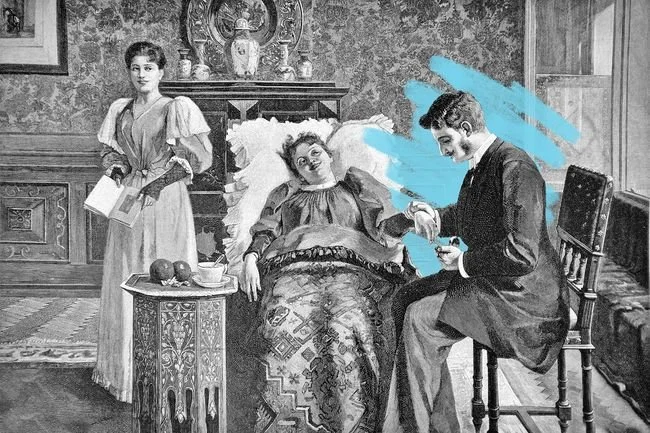
Imagine that when you arrive for surgery, your doctor is wearing a black coat stiffened with blood and viscera from previous operations. In the mid-1800s, a dirty coat was the badge of a busy practice. Operating theaters were built on the top floors of hospitals in part to prevent patients’ screams from reverberating through the halls.
To make matters worse, roughly half of those who survived surgery died of sepsis.
Anesthesia and antiseptic procedures—the idea of doctors washing their hands and plunging scalpels into carbolic acid — were evangelized starting in the mid-1800s. But doctors adopted anesthesia within a few years while antiseptics didn’t catch on for decades. Why did the idea of handwashing spread so slowly?
Doctor Atul Gawande describes it as a “slow idea” for two reasons:
Anesthesia attacked a highly visible problem while germs were intangible.
Anesthesia made life easier for everyone while antiseptics were inconvenient.
Most people agree that AI is a fast idea, one with visible effects and quick adoption, even if they dispute its societal value. LLMs became a facet of our lives in less than 3 years, following a trajectory similar to that of anesthesia. AI empowers game developers to architect systems, squash bugs, and produce art in a fraction of the time.
Though devs have been building games without AI for decades, the activity of handcrafting code and art suddenly feels like a slow idea: difficult to practice, but with intangible benefits. The solo developer behind A Short Hike explained in a GDC talk that he spent hours combing through pictures of New England foliage to pinpoint the exact colors of autumn leaves. Though the game was published in 2019, the developer’s effort would have paid dividends even in the era of AI because it makes the A Short Hike’s mountain environment feel like a fall wonderland.
While Claude automates many of my coding tasks, I find value in slowing down sometimes. One Sunday I brought an iPad to a café in Seattle. Two coffees later, I had barely drawn 15 frames of a character for my game—my first animation as a non-artist. Still, I felt a sense of pride and discovery as dormant neurons fired. Eventually, I did hire a character artist, but the café adventure helped me understand their creative process.
“Fast” and “slow” are not value judgements. The labels acknowledge that two ideas — or approaches to creative work — can have vastly different adoption curves despite being valuable in their own ways. There will always be problems in game development that scream out for automation and ones that demand slow creative labor.
Often critics pose the question, “Should game developers code or draw artisanally—or should they use AI?” But that’s a false dichotomy. Once we perceive a traditional creative skill as a “slow idea,” the questions become more pointed: Why is it hard for non-artists to sketch a character? Why do people without technical backgrounds struggle to make the character shoot projectiles?
Driving adoption of “slow skills” requires both creativity and empathy. Simple checklists — written by doctors for doctors — have become one of the most effective tools for fighting sepsis. “You have to understand people’s existing norms and barriers to change,” Gawande wrote. “You have to understand what’s getting in their way.”